Day Experience
English copyZvartnots, Sardarapat & Echmiadzin
What was lost, what was defended, and what still continues. One day on the Ararat plain.
Free to askNo payment on SafarAnswered by a person
The route story
Lost. Defended. Continuing.
Three places on the same plain, each keeping a different part of Armenia. Zvartnots is a cathedral that was imagined on a grand scale and did not survive. Sardarapat is where, in 1918, soldiers and villagers held the line that saved what became the country. Echmiadzin is the seat of the Armenian Church, still working, still full. Most days run them the other way round. This one ends where the story does: inside a working church, at the evening service if one is held that day.
The shape of the day
Zvartnots first, for the morning light on the columns; Ararat, when it shows, is a gift. The farthest stop at midday, when there is no light to lose. Echmiadzin last, so the day closes in a living church rather than at a memorial.
- Yerevanthe start
- Zvartnotswhat was lost
- Sardarapatwhat was defended
- A table on the way backlunch
- St Hripsimethe early plan
- Echmiadzinwhat continues
- Yerevanhome
- By road, across the plain
On the map
Where the day goes
The day itself
Solid gold the road out, lighter gold the road back through Vagharshapat. Not to scale: Zvartnots and Vagharshapat sit only a few kilometres apart.
Where in Armenia
The day never leaves the Ararat plain west of Yerevan. The three places are close together; the drives between them are short.
- 01 / 05
Begin with what was lost.
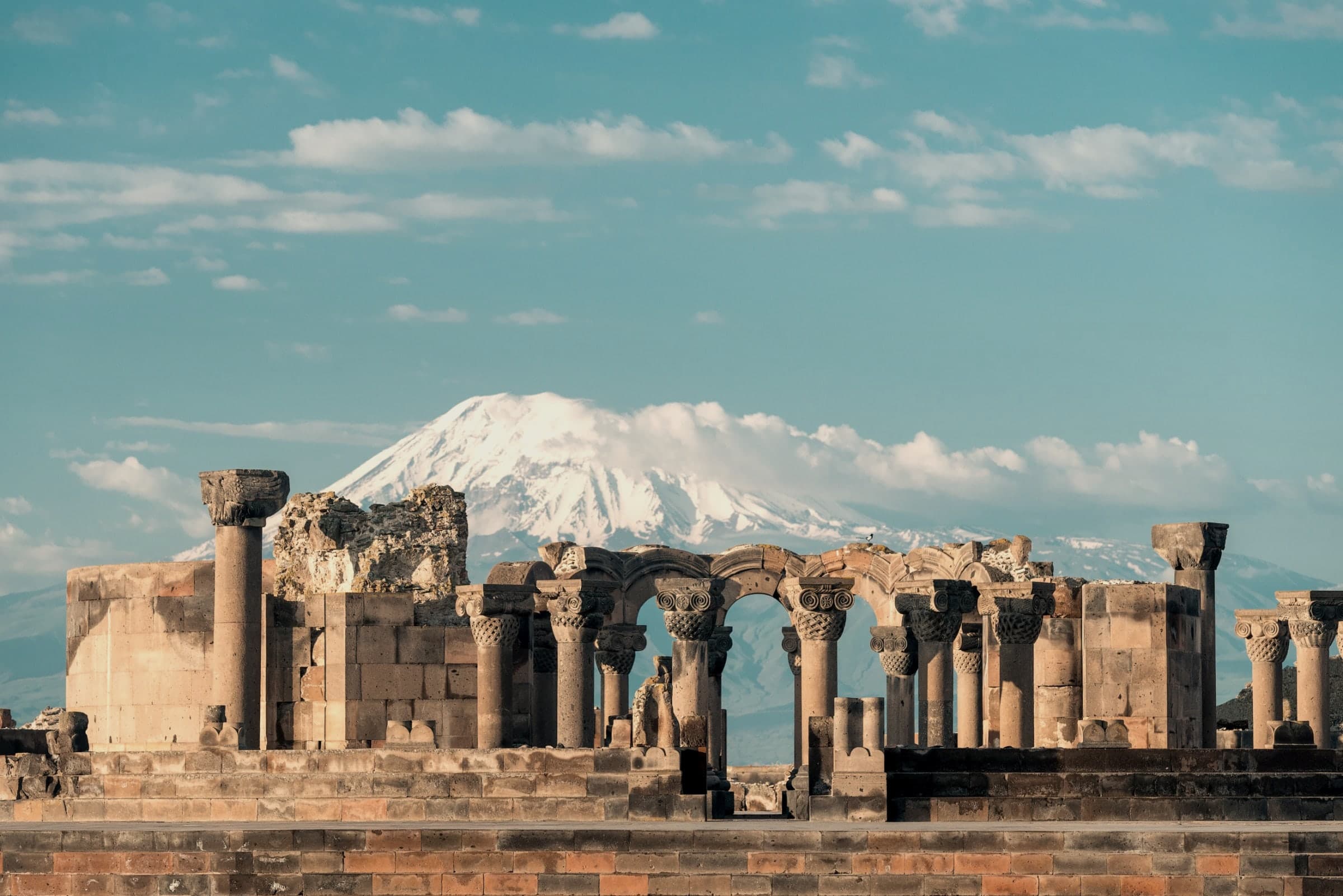
A ring of columns on a platform, and Ararat behind them.
01ZvartnotsMORNING · THE FIRST STOP
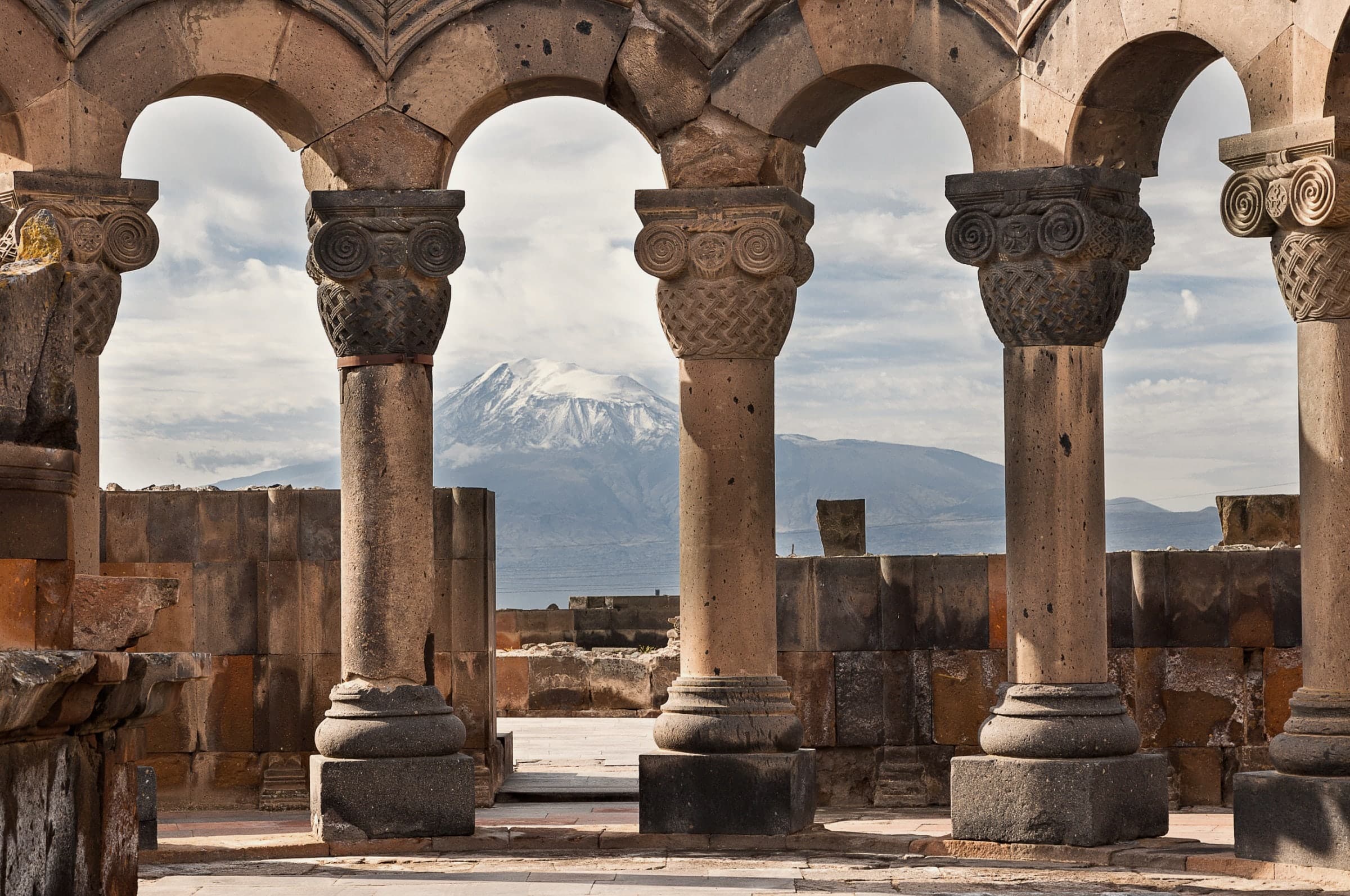
In the seventh century a round cathedral rose here, tier on tier, unlike anything else built in Armenia. It did not last. What stands now is its first ring of columns, carved capitals with eagles and vines, and the outline of a building people still argue about how to rebuild on paper.
A small museum on the site has a model of how it may have looked. Seeing it first makes the ruin make sense.
Level ground, little shade. Bring water in summer.
LOOK FORThe carved capitals up close, and Ararat framed in an arch.
- 02 / 05
Stand where it was held.
A memorial in red stone, then a museum of the life it defended.
02SardarapatMIDDAY · THE FARTHEST STOP
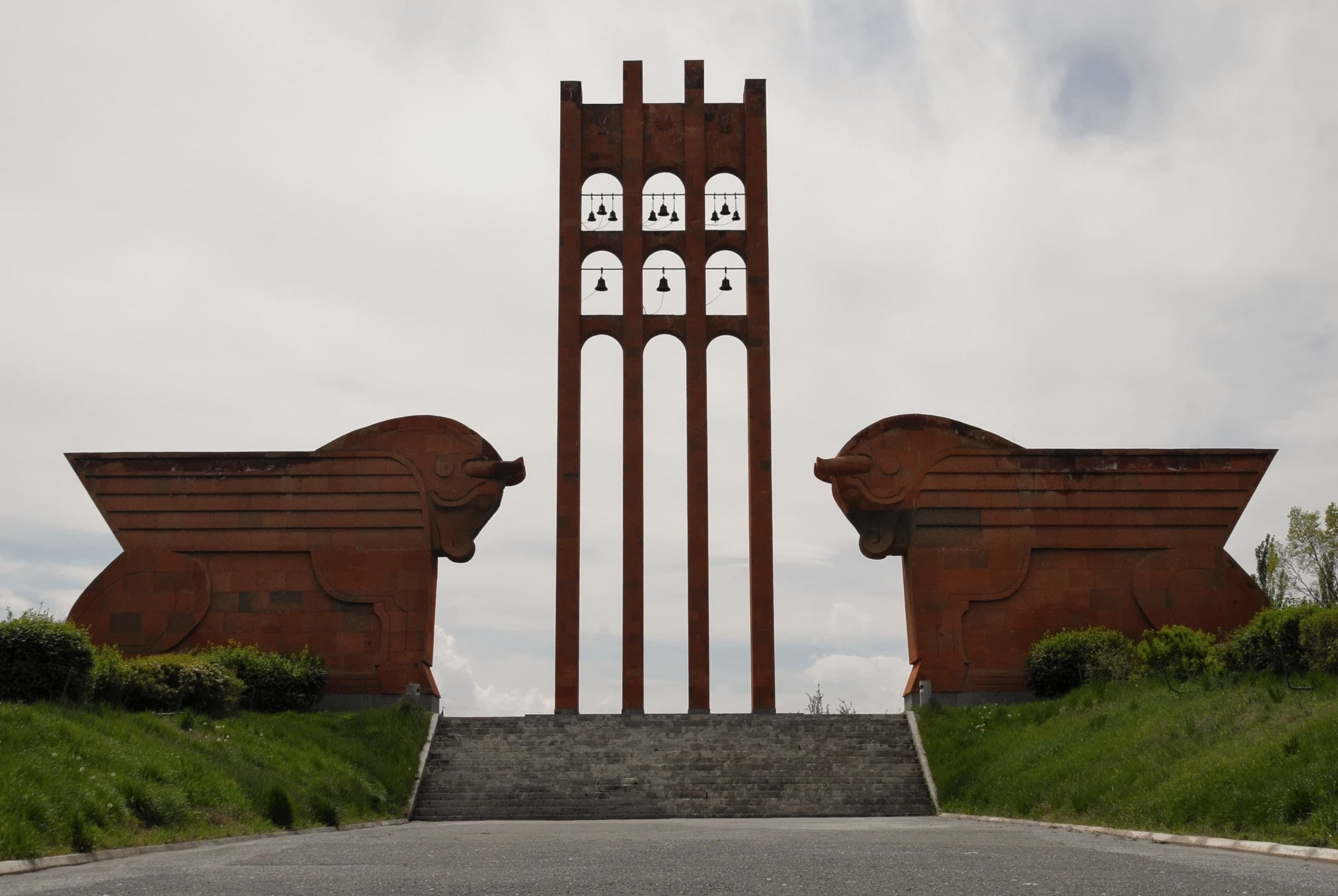
In May 1918, near the village of Sardarapat, soldiers and villagers stopped the Ottoman advance. Days later, an Armenian republic was declared. The memorial is in red tuff: a bell tower, two winged bulls, an avenue of eagles, a curved wall of reliefs. Its architect drew on symbols far older than the Soviet state that built it.
The museum beside it has almost no windows. Inside is how people lived: tools, carpets, costume, lace. The monument says it happened. The museum shows the life that was defended. See both, in that order.
An open walk to the memorial, then indoors. Closed on Mondays.
LOOK FORThe women on the memorial wall, carrying bread and rifles.
- 03 / 05
Break bread.
Lunch on the way back across the plain.
03A table on the way backMIDDAY · LUNCH
Between the memorial and the churches, the day stops to eat: a table with a host on the way back across the plain.
The host, where you eat and what is served are confirmed with your request.
Seated. No walking.
 Illustrative: the host and what is served are confirmed with your request.
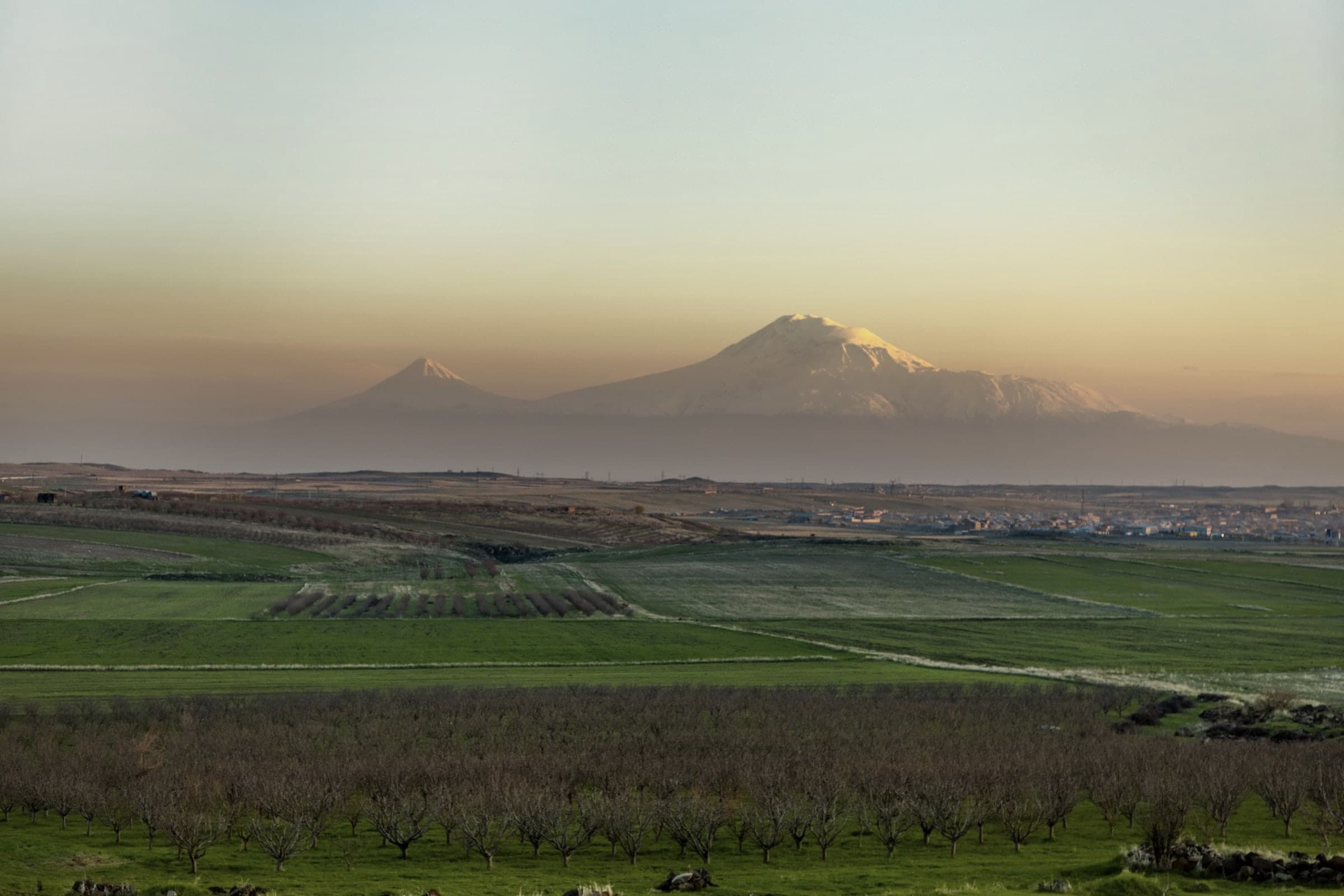
Back across the plainBY ROAD
The mountain stays in view the whole way back, on the far side of a border you cannot cross. It is on the coat of arms, and everywhere in Armenian visual memory.
- 04 / 05
One church, the early plan.
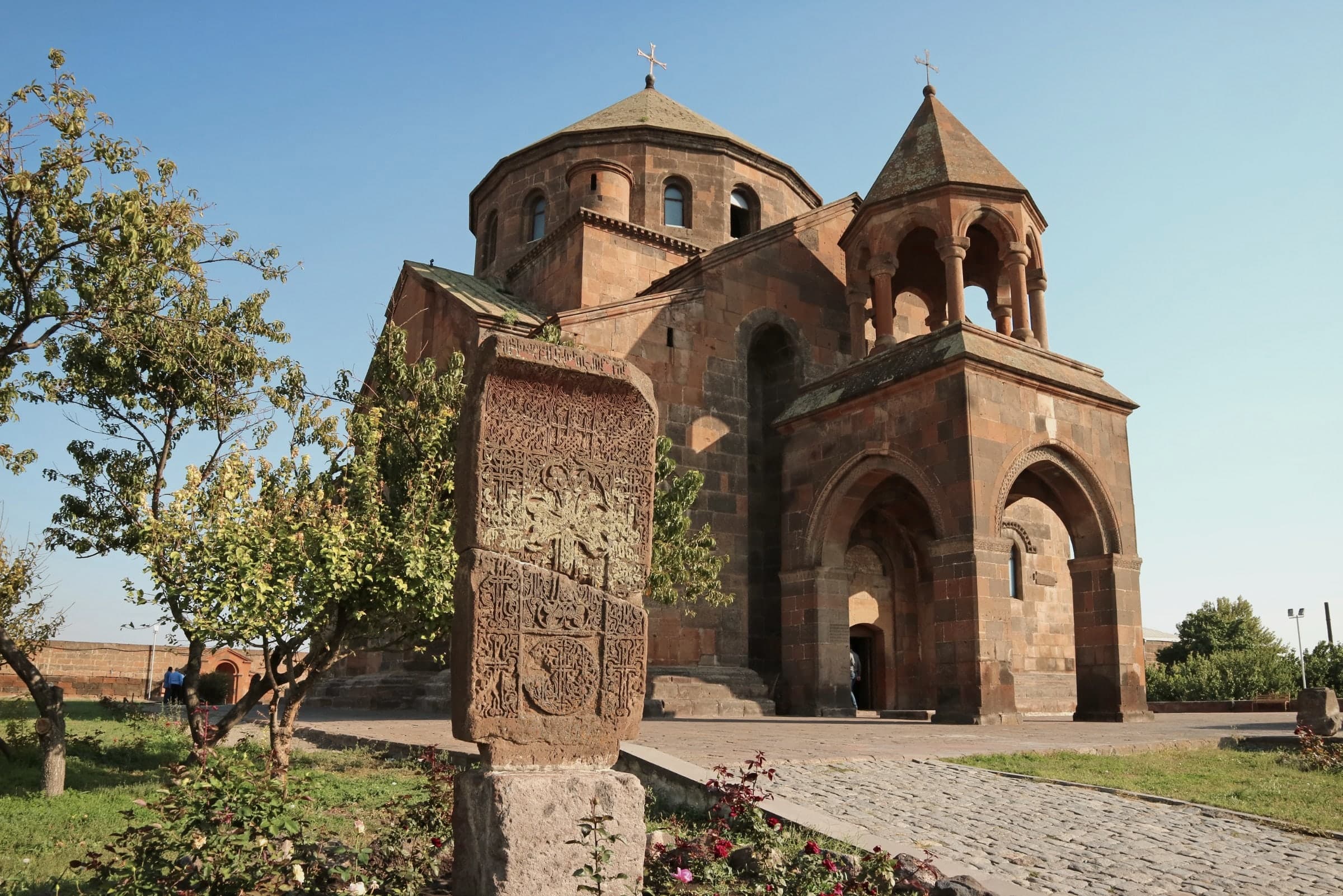
A seventh-century church in a walled yard.
04St HripsimeAFTERNOON · A SHORT STOP
At the edge of Vagharshapat stands a church built in the seventh century. Its plan, a cross under a single dome, is one Armenian builders returned to again and again. It is named for a young woman martyred here before the country turned Christian.
Level. Legs covered inside; men without hats.
- 05 / 05
End where it continues.
The mother church, still at work, and its evening service if one is held.
05EchmiadzinLATE AFTERNOON · THE LAST STOP
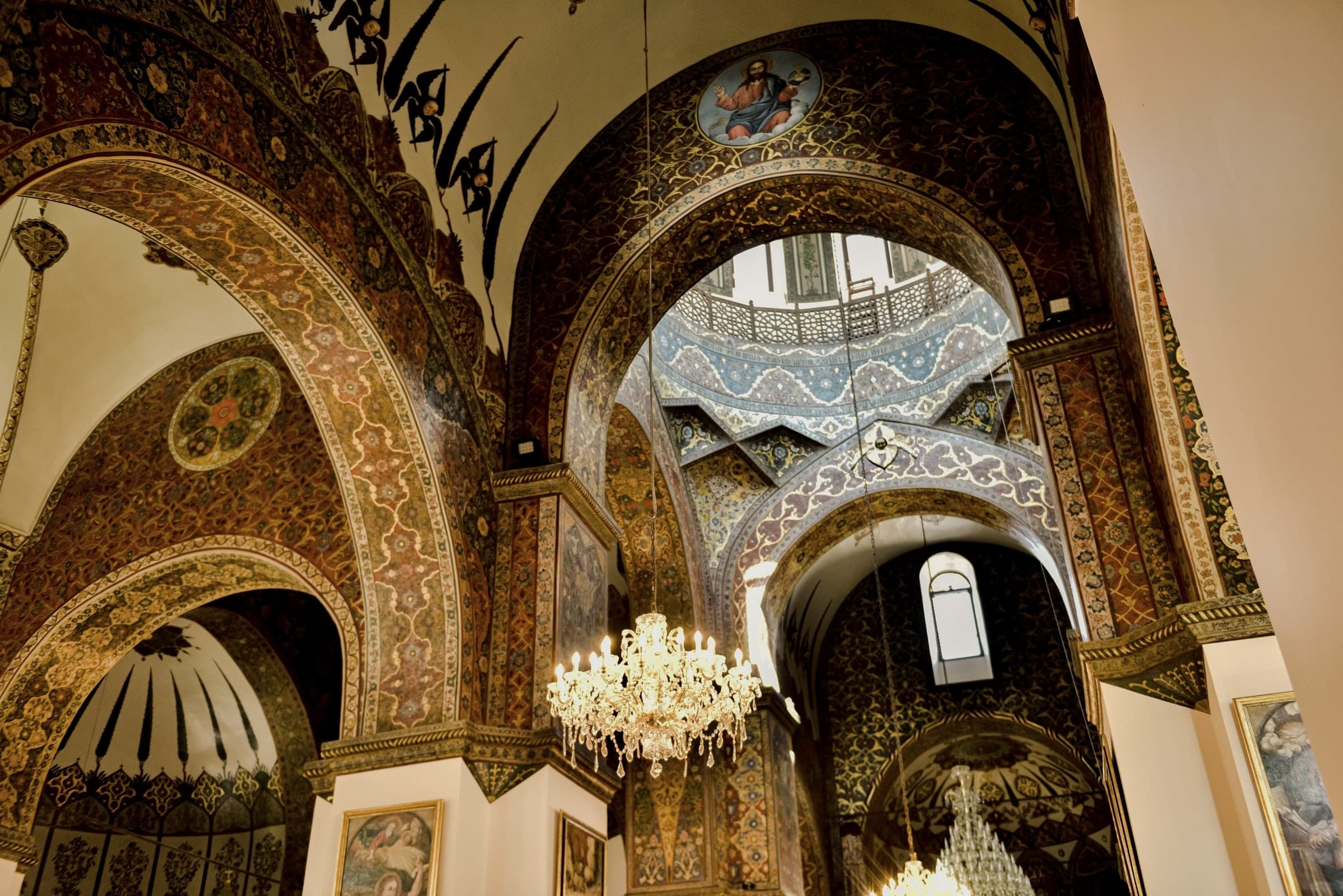
Echmiadzin is the seat of the Armenian Church, where its head lives and works. Tradition places the first cathedral here at the very start of the fourth century, when Armenia became Christian. Recently restored, its painted interior is bright again, and many of the people inside came to pray, not to look.
This is why the day ends here. After a ruin and a memorial, the last place is still alive.
Optional · if you want it: Stay for the evening service. If a service is held that evening, you can stand at the back and listen: chant, candles, the church filling. You do not need to be religious, only quiet. Then the drive home is half an hour.
Whether a service is held that evening, and when, is confirmed with your request.
Level. A working church: legs covered, men without hats, quiet during services.
LOOK FORThe painted arches, and the blue dome above them.
Before you decide
Is this day for you?
Best for
- Anyone who wants to understand why Armenia is still here, not only what it looks like
- A day with little driving, early or late in a trip
- Travellers with Armenian roots, and those travelling with them
Think twice if
- You want landscape. This is a day about people and what they built and kept; Garni and the canyons are the other way.
- You would rather not spend time in working churches or at a war memorial.
- Your only free day is a Monday, when Zvartnots and Sardarapat are closed.
WHY THIS IS ON SAFAR
The usual day starts at Echmiadzin because it is nearest, adds Zvartnots down the road, and finishes at a war memorial. Safar turns it around. The ruin gets the morning light, the memorial gets its museum, and the day ends in a church that is still in use.
Where this sits in a trip
A day out of Yerevan with little road, good early in a trip, before the long days south and north. Zvartnots is close to the airport; a journey can use part of this day on an arrival or a departure.
Armenia, in fullFinal details are confirmed before fulfillment.